We’ve explored the connection between the mind and the body, and how the body stores perceived and experienced threats in its physicality—through posture, muscle tension, protective movements, or restlessness. These responses are protective by nature, yet over time they can create cycles that become detrimental to our overall well-being.
We often hear about the importance of releasing tension, exercising, and listening to our bodies—but how do we actually learn to listen? One common challenge is not knowing where stress or trauma lives in our bodies, or where we may need a little more care. Have you ever ended a long, even fulfilling, day feeling sore, unsettled, or simply “off”? I often experience this as a signal to check in with myself and notice where stress has quietly accumulated.
Much of our understanding of the mind–body connection was shaped by Dr. Bessel van der Kolk, particularly through his book The Body Keeps the Score. One of his key insights is that healing the mind requires tending to the body—and vice versa (van der Kolk, 2014). This idea has influenced art therapy practices that view the body as a kind of map: holding pathways of safety, tension, and avoidance. One way to access these maps is through a practice known as a body scan or body mapping. This practice allows us to visually explore where tension lives within our bodies.
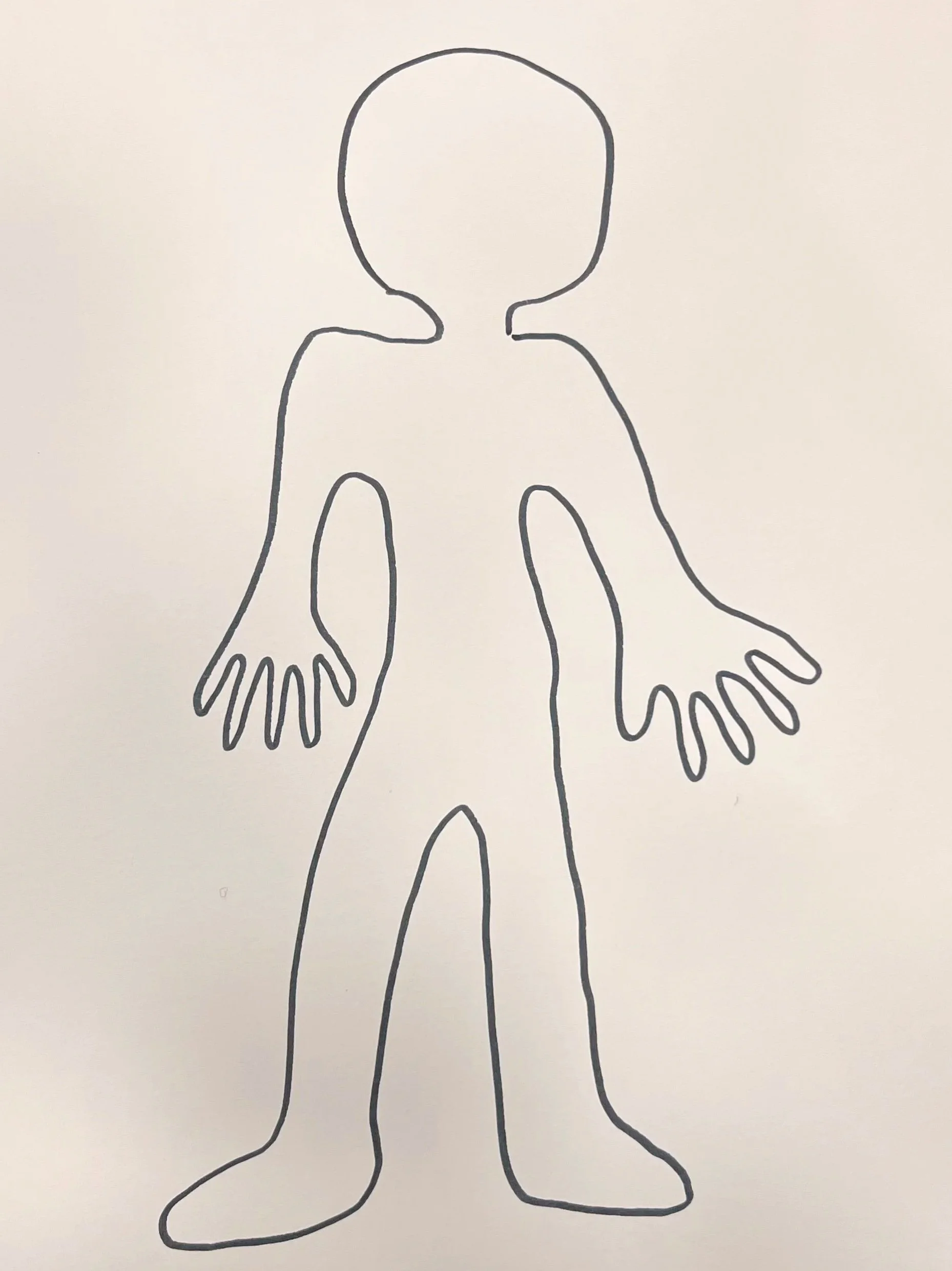
To begin, find a quiet space and set aside about 30 minutes. You might light a candle, make yourself your favorite tea, or simply pause and breathe. With paper and drawing materials, sketch a simple outline of your body—accuracy isn’t important. Slowly check in with each area, asking questions like: How does my head feel? My chest? My stomach? Use color or marks to represent what you notice.
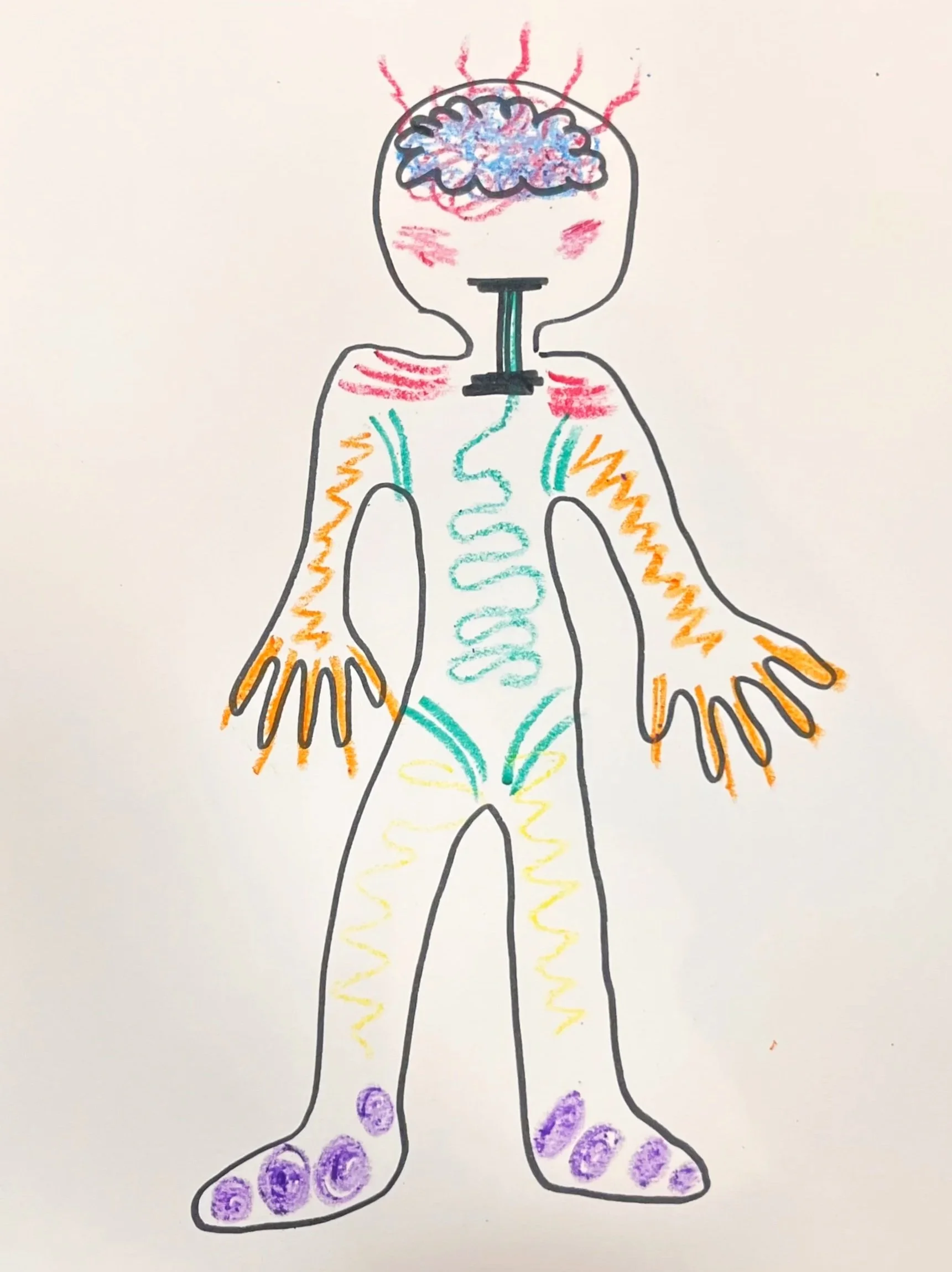
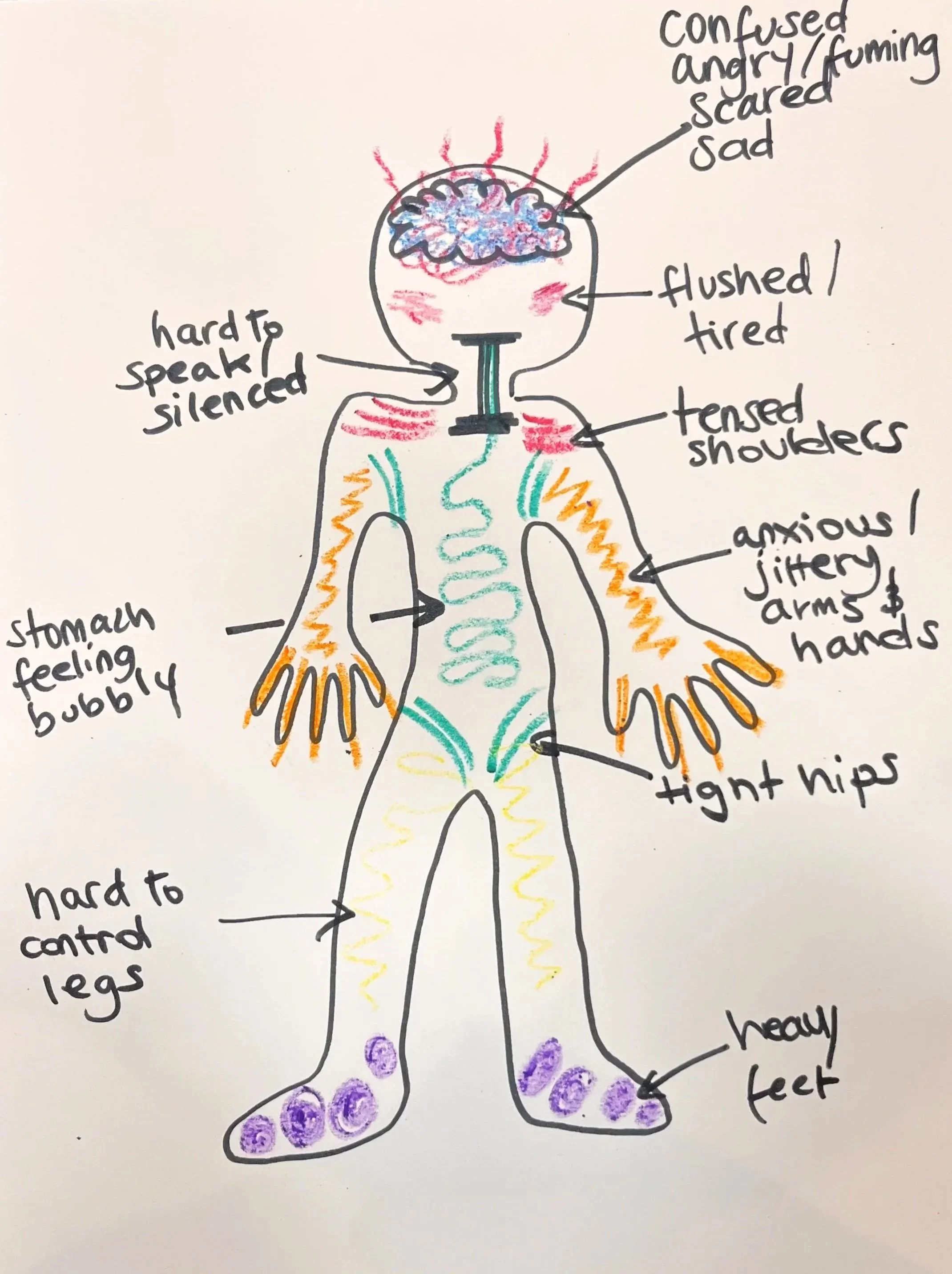
Once you are finished:
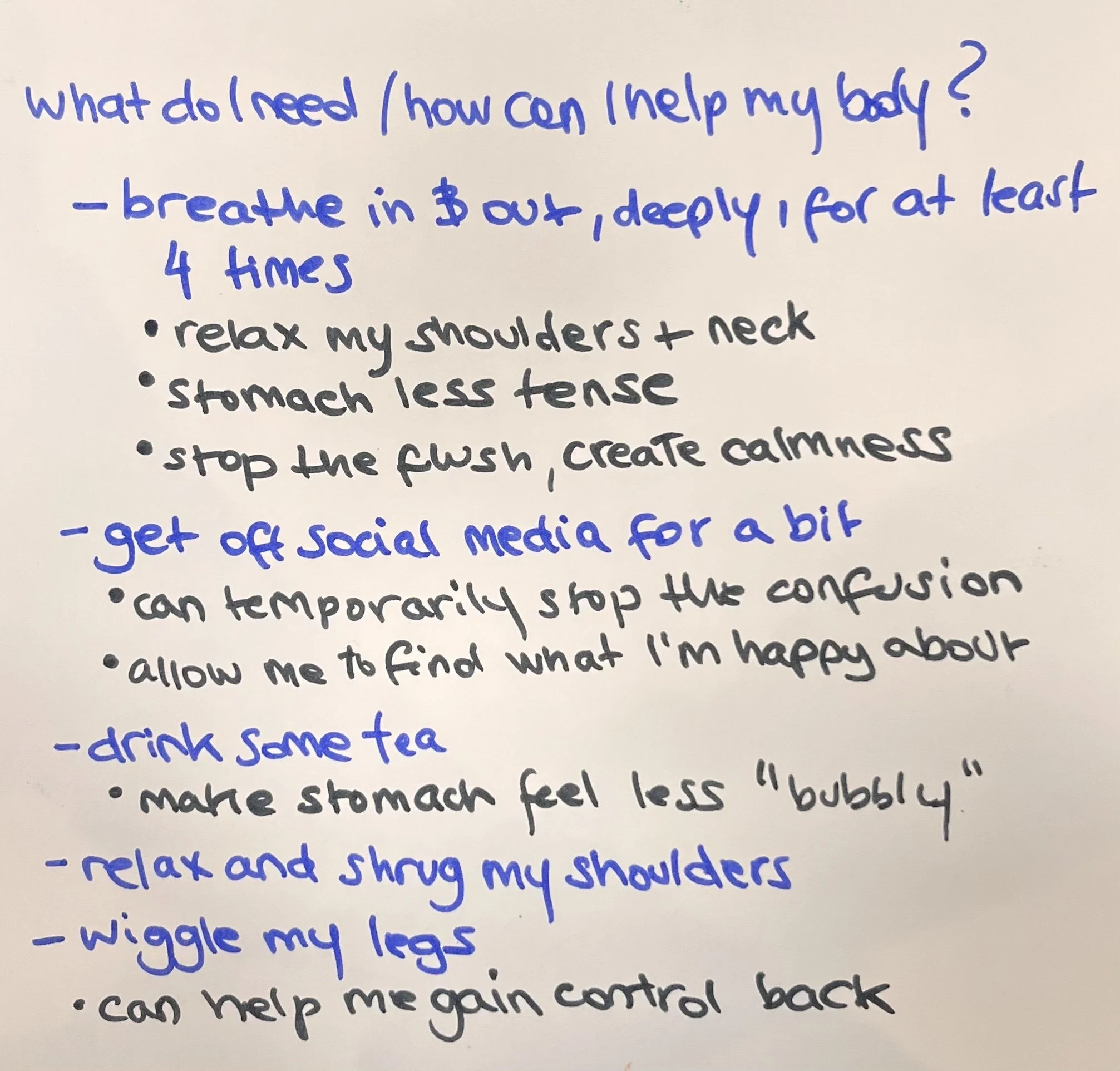
Take a moment to name what you expressed. Naming sensations or emotions can lessen their intensity and help restore a sense of agency. Finally, turn the page and reflect on what might help counterbalance any discomfort you discovered. You are the expert of your own body. Trust its signals. Protect your peace. Caring for yourself is often the first step toward caring for others.