Humans have benefited from artistic self-expression since prehistoric times. In fact, people who lived in caves started documenting their everyday lives, routines, struggles and their victories through drawings and paintings. These artifacts serve as proof of the benefits of artistic expression as a way to understand and explain the world through non-verbal ways.
If you’ve ever doodled while listening to a lecture in school or while having a long conversation on the phone, you’ve engaged in artistic expression. Sometimes, words just aren’t enough; they can feel like a barrier or may simply be inappropriate for expressing the emotions we are experiencing. Art, then, holds the power to express what words can’t.
Creative Arts Therapies have long been studied by researchers, clinicians, and artists for their positive impact on mental health. The term “art therapy” emerged in the 1940s, when British artist Adrian Hill experienced the healing effects of artistic self-expression during his recovery from tuberculosis, and the American Art Therapy Association was later founded in 1969. Art Therapy is a form of psychotherapy facilitated by a licensed or supervised professional and has been shown to help reduce stress and anxiety, increase self-esteem, and promote self-exploration (Shoukla et al., 2022). It is accessible to anyone—no artistic skill is required, only an open mind and willingness to engage in the creative process—though therapeutic guidance is recommended, especially when using art for mental health purposes.
An art therapy activity that can allow for that self-exploration and self-expression that we are much talking about is the Inner Landscape. This activity can tap into our feelings, personalities, and can give us a better understanding of ourselves, our support system, what we like and don’t like. Like many art therapy directives, this experiential does not require a specific set of materials. In fact, you can express your inner landscape through drawing, painting, photography, collage, sculpture or any form of fiber arts materials (like crocheting). As an example, I will collage my inner landscape attaching shapes, colors, textures and images to best create what represents my inner landscape. I am providing this just as a sample, if you would like to engage in this exercise, do not feel the pressure to make it look like mine.
In order to not over analyze and possibly slip-into our inner critic, think of your inner landscape as a safe and calm place, favorite color, a shape that reminds you of your soft edges, or textures that bring you a comfortable feeling. As it is personal and varies between everyone, here are some questions to pose yourself before you start.
What natural settings form my inner landscape? A desert? A forest? A sea or ocean? Is it a wetland? Hills?
At what time of the day does my landscape exist – day or night? Is there light or darkness?
What are the meteorological conditions in my landscape? Is it raining, snowing, sunny, cloudy, or a combination?
If you’re choosing to collage your inner landscape, choose a couple of images that catch your attention and interest. Please remember this represents you, this is a moment that you’re dedicating to yourself. If you wish, you can share this with whomever you respect and want to share it with.
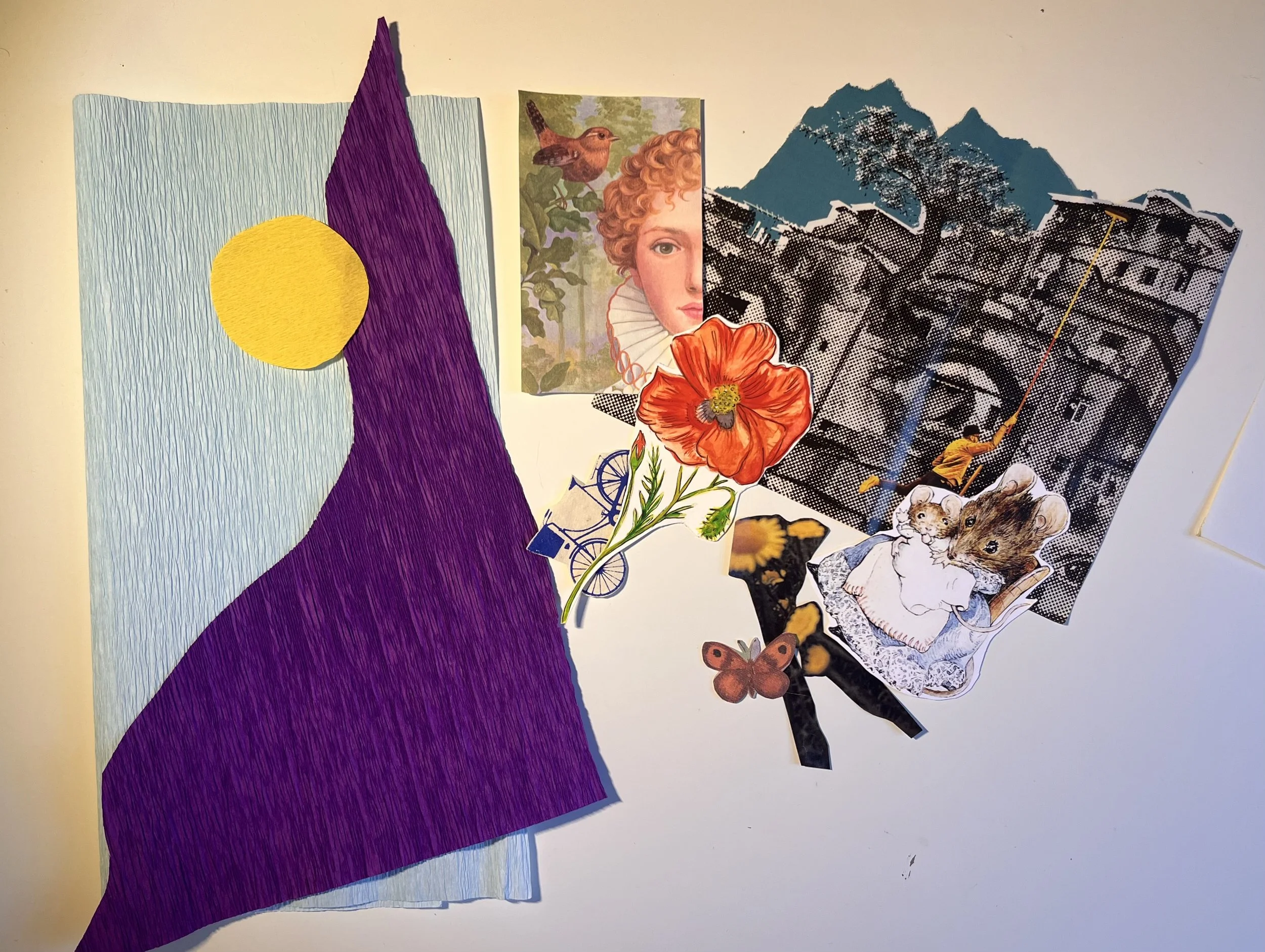
Collage images I have chosen
Your image is now taking shape. These are some introspective questions you can ask yourself:
If you were to give it a title, what would it be?
How do you feel after taking some time reflecting on who you are and what makes you, you?
What surprised you, and what, if any, were elements of your product that you were expecting to see?
Do you feel satisfied with your image, or is there something missing in describing you?
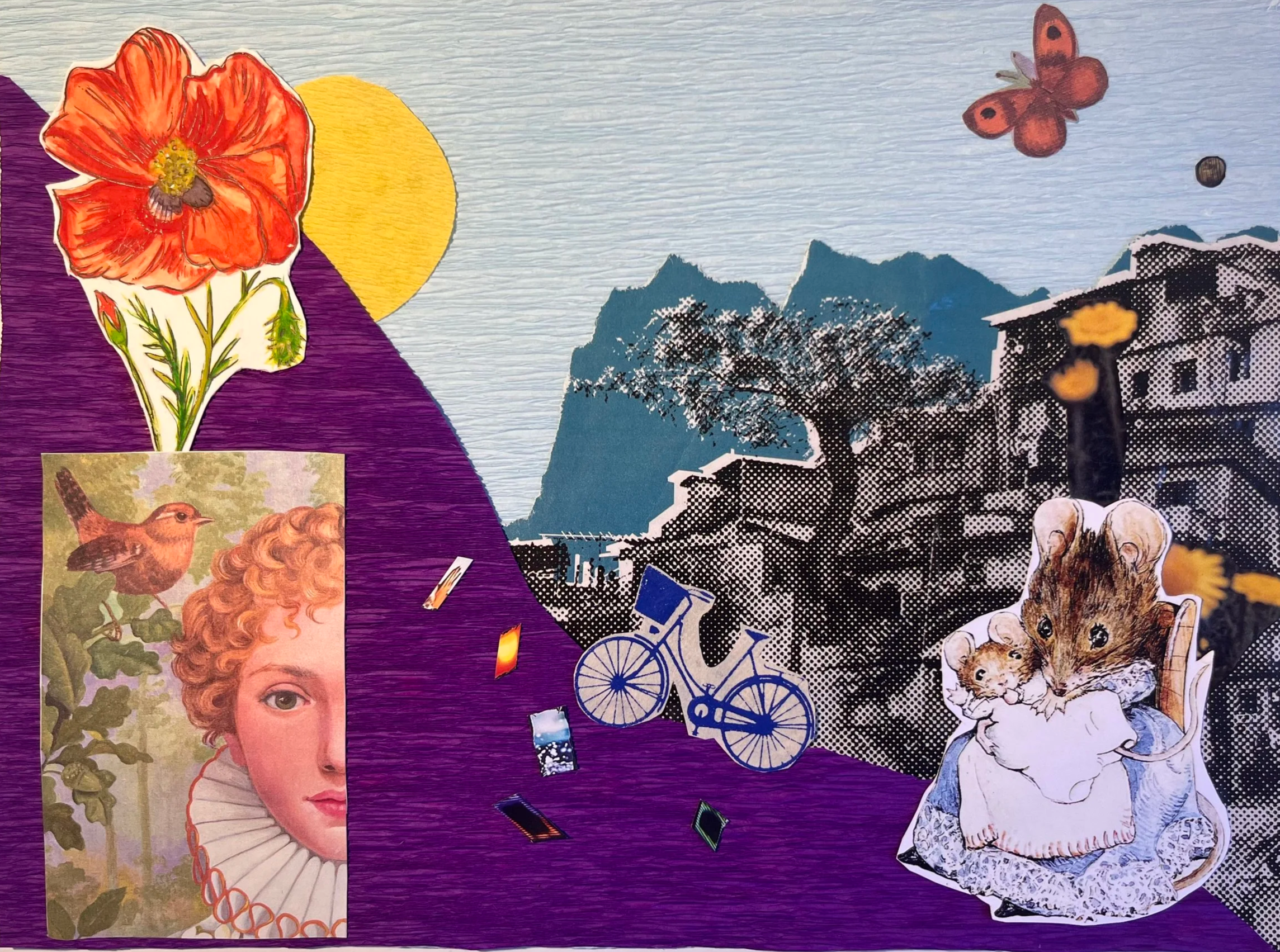
My final Inner Lanscape
As you complete your piece, congratulate yourself for taking the time to pause what you were doing and dedicate it to the love and care of your Inner Landscape. Art therapy is not about the final product, as much as it is valuable to complete our pieces; instead what is more valuable for art therapists is the process of your creation. Like for a lot of artistic pieces, they might never end, we could always find something to add. However, taking the moment to be proud of ourselves for pausing, creating and reflecting is more important than the final pieces we are left with.
References
Shoukla, A., Choudhari, S.G., Gaidhane, A.B., & Syed, S..Q. (2022). Role of Art Therapy In The Promotion of Mental Health: A Critical Review. Cureus, 14(8). DOI: 10.7759/cureus.28026.