The Body as a Map: An Art Therapy Reflection

We’ve explored the connection between the mind and the body, and how the body stores perceived and experienced threats in its physicality—through posture, muscle tension, protective movements, or restlessness. These responses are protective by nature, yet over time they can create cycles that become detrimental to our overall well-being.

We often hear about the importance of releasing tension, exercising, and listening to our bodies—but how do we actually learn to listen? One common challenge is not knowing where stress or trauma lives in our bodies, or where we may need a little more care. Have you ever ended a long, even fulfilling, day feeling sore, unsettled, or simply “off”? I often experience this as a signal to check in with myself and notice where stress has quietly accumulated.

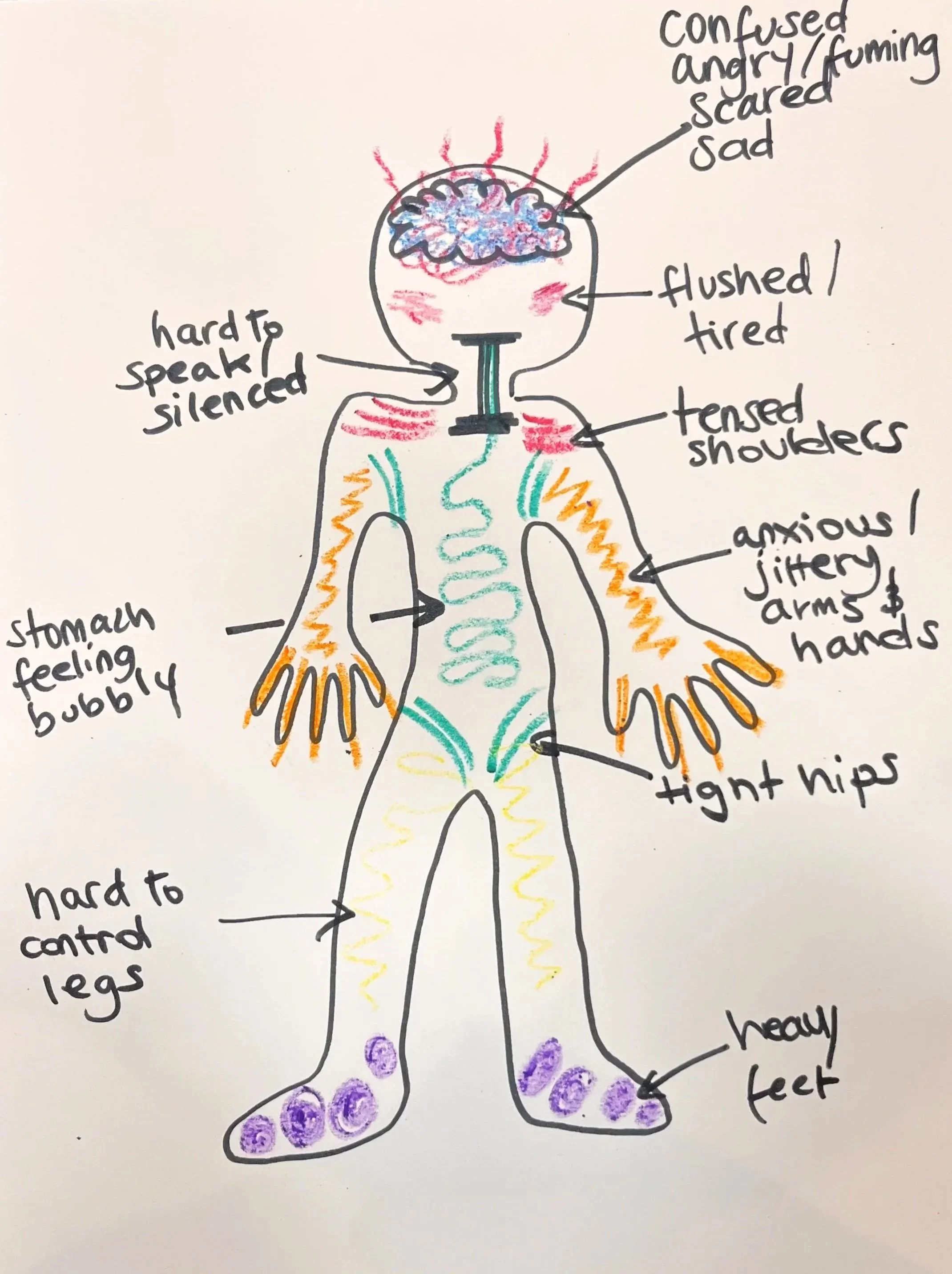
Much of our understanding of the mind–body connection was shaped by Dr. Bessel van der Kolk, particularly through his book The Body Keeps the Score. One of his key insights is that healing the mind requires tending to the body—and vice versa (van der Kolk, 2014). This idea has influenced art therapy practices that view the body as a kind of map: holding pathways of safety, tension, and avoidance. One way to access these maps is through a practice known as a body scan or body mapping. This practice allows us to visually explore where tension lives within our bodies. 

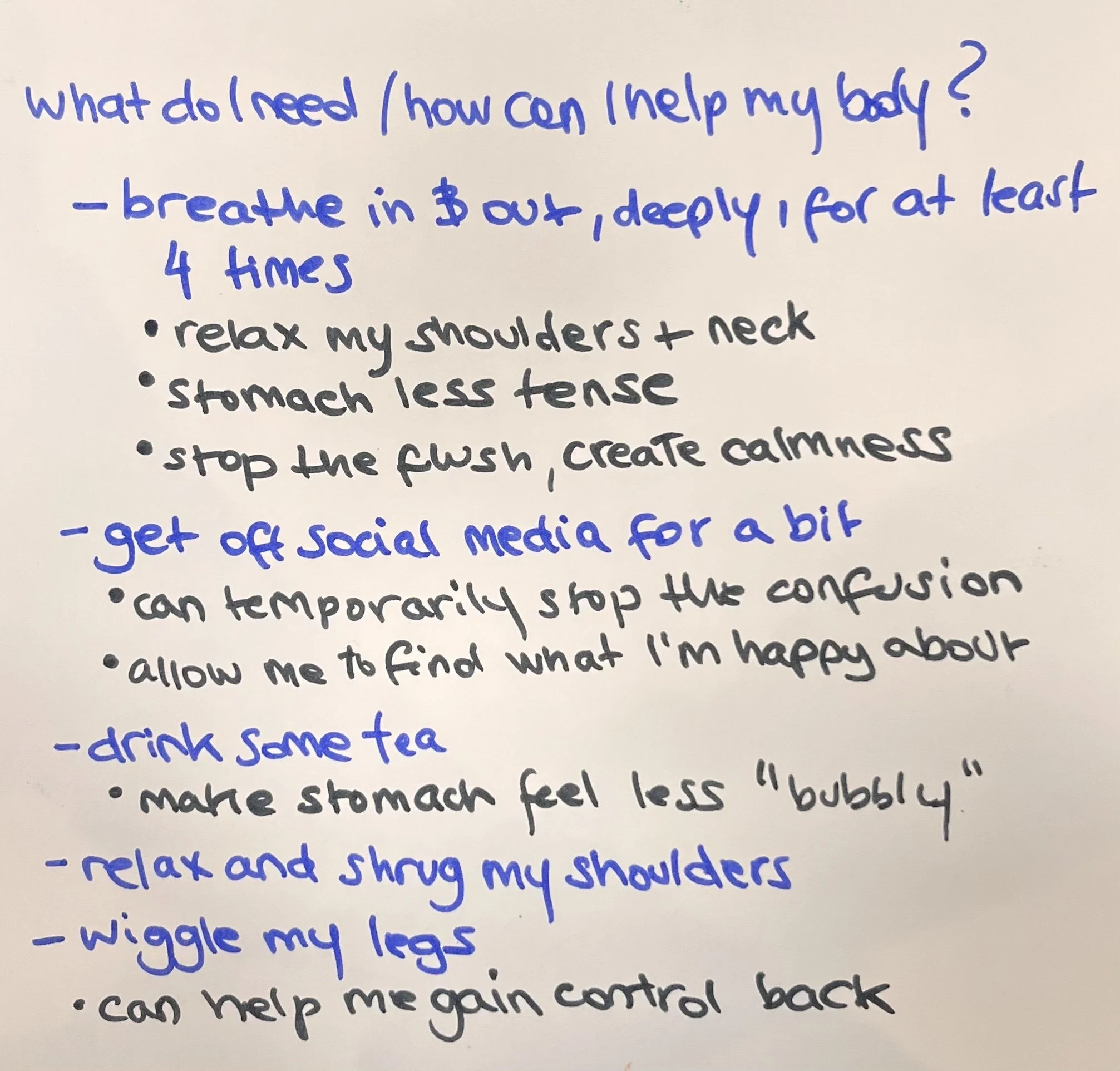
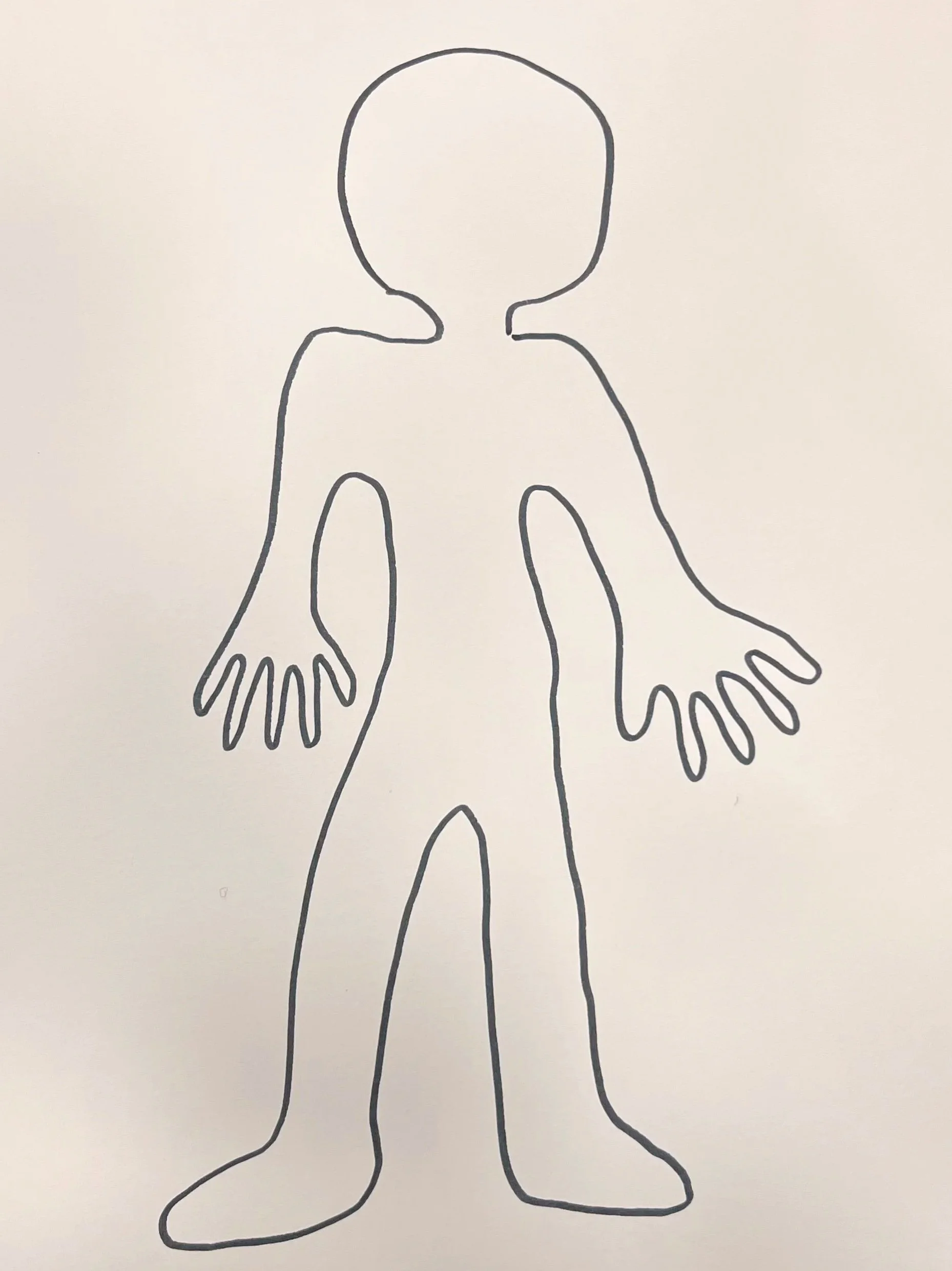
To begin, find a quiet space and set aside about 30 minutes. You might light a candle, make yourself your favorite tea, or simply pause and breathe. With paper and drawing materials, sketch a simple outline of your body—accuracy isn’t important. Slowly check in with each area, asking questions like: How does my head feel? My chest? My stomach? Use color or marks to represent what you notice.
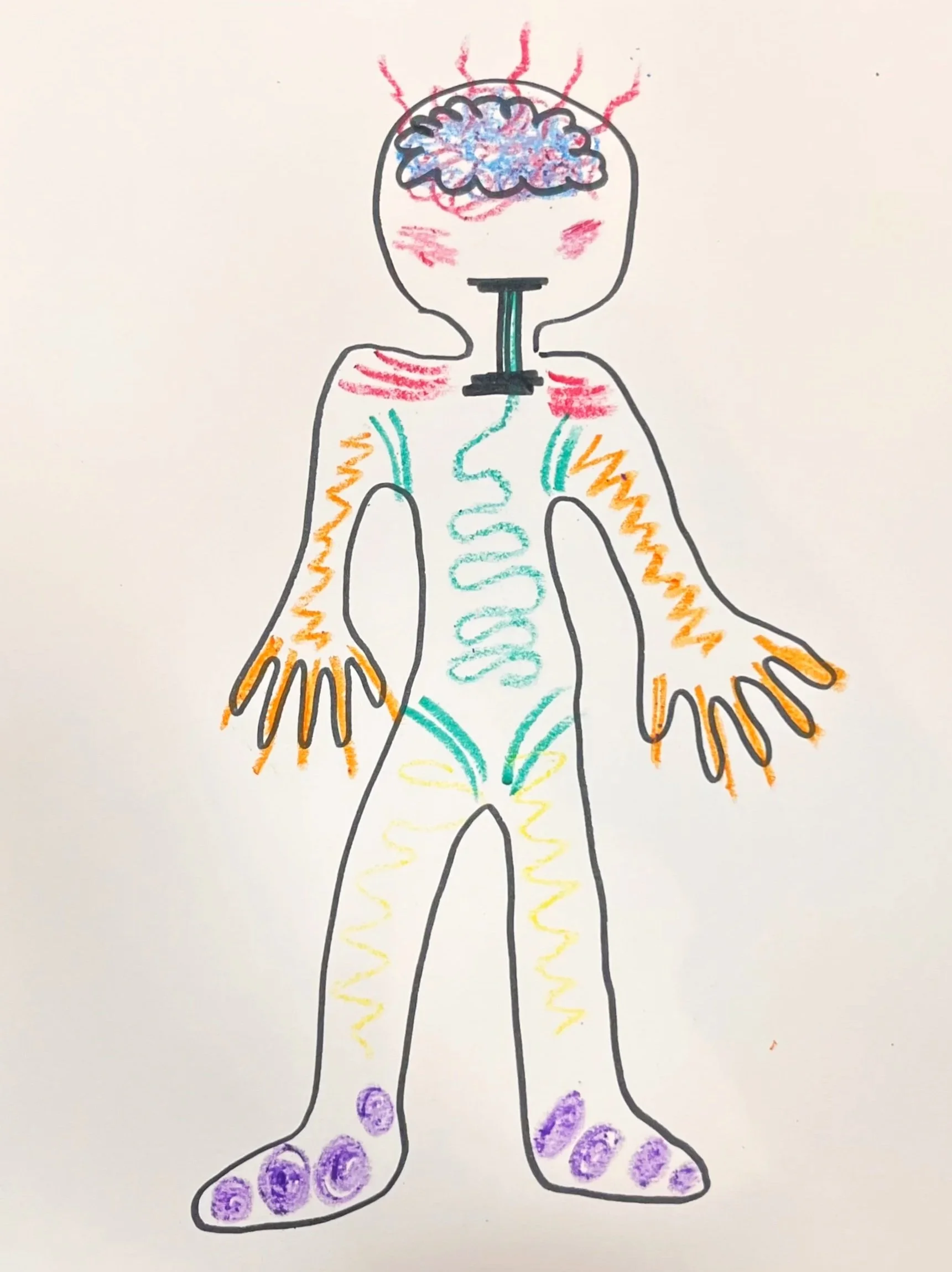
Once you are finished:

Take a moment to name what you expressed. Naming sensations or emotions can lessen their intensity and help restore a sense of agency. Finally, turn the page and reflect on what might help counterbalance any discomfort you discovered. You are the expert of your own body. Trust its signals. Protect your peace. Caring for yourself is often the first step toward caring for others.
Care as Resistance: Taking Care of the Body in Times of Fear

There is a tremendous amount of suffering, fear, anger, and confusion taking over nearly every part of the world right now. This reality is undeniable and a shared experience. It can be difficult to put our feelings into words or remain functional when anxiety and loss permeate so many of our lives. During moments of hardship and loss, however, it becomes especially important to rely on what we do have by focusing and directing our energy toward things that are within our control. One example of this is the value of nurturing, sharing, building, and respecting community. In times when we are forced to feel helpless and fearful, it is imperative that we counteract these emotions with acts of love and connection. The connection I am referring to can be as simple as reconnecting with our own bodies. 

There is substantial research on how the body stores information that the brain processes—or, conversely, information that is too traumatic to process cognitively. For instance, the renowned psychiatrist Bessel van der Kolk explores this concept extensively in his bestselling book The Body Keeps the Score (2014), in which he examines the profound connection between the mind and the body. Dr. van der Kolk explains how both systems store and process traumatic experiences. Prior to the publication of this work, the mind–body connection was largely unexplored in mainstream trauma research. One of the central takeaways of this concept is that healing from trauma requires addressing both the mind and the body (van der Kolk, 2014). Because of this connection, when the mind suffers, the body does as well; in turn, the body’s response to suffering can deepen the disconnection between the two. When this disconnection occurs, the mind can enter a state of “override”—a term used by neuroscientists and psychologists to describe the brain’s heightened perception of danger—which then triggers the body’s stress responses: fight, flight, freeze, or fawn (November 7, 2016). 

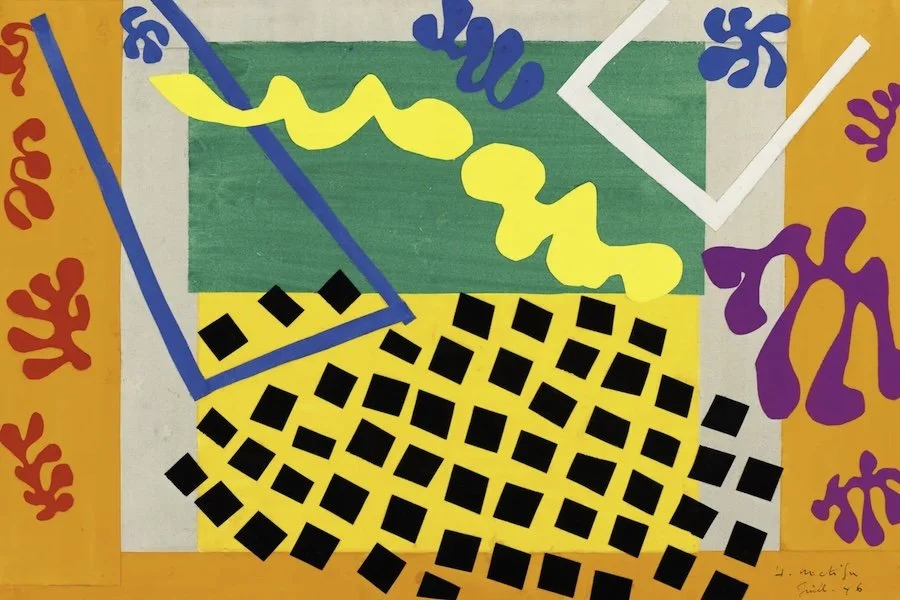
Henri Matisse - Cutout (henrimatisse.org/cutouts.jsp)

The body’s response to oppression offers a clear example of this phenomenon. Oppression demands, among other things, submission and conformity, while suppressing authenticity and self-expression. When the mind perceives these threats—such as the pressure to conform in order to survive—the body responds in various ways. These responses may include chronic tension in muscles, fascia, and tissues as protective mechanisms; postural changes toward defensiveness, such as hunching or rigidity; the development of psychosomatic illnesses, including stress-related conditions resulting from a weakened immune system; or emotional shutdown as a way to cope with overwhelming threats (Eloff, 2024). On a more hopeful note, there are ways to counteract these bodily rigidities that are often simpler than we might expect.

One such method is laughter, which may seem strange or cliché. In moments when there is very little to laugh about, finding small opportunities to experience joy—perhaps with people we trust—and allowing ourselves a genuine belly laugh can be an effective way to release built-up tension in the body (Stiwi & Rosendahl, 2022). These researchers analyzed more than 2,000 studies examining the effects of laughter on somatic and psychological conditions and found surprisingly positive outcomes. Laughter was shown to improve mental, physiological, and psychological health, making it a powerful and accessible tool for well-being. Another low-cost and accessible practice is setting aside personal time to play music—whether through headphones or out loud—and allowing oneself to dance. Dance, when practiced with the intention of releasing bodily tension through movement and shaking of the limbs, can help alleviate physical stress in a relatively short amount of time (January 17, 2023).

Small acts of care for ourselves and others can help us find moments of light during periods of darkness. Laughing with loved ones, nurturing and respecting our communities, and dancing intentionally to release tension are all acts of resistance that can help counterbalance the oppression, conformity, fear, and anger we are currently experiencing. Cultivating awareness of our own needs and caring for both our minds and bodies is a crucial first step toward extending that care to others.

References

Eloff, A. (2024). Enacting the Anti-fascist Body: Somaterapia as Collective Liberatory Becoming. Somatechnics, 14(1).

Golden, Bernard. November 7, 2016. The Power of Emotions to Override Rational Thought. URL: https://www.psychologytoday.com/us/blog/overcoming-destructive-anger/201611/the-power-emotions-override-rational-thought.

Hornthal, Erica. January 17, 2023. Every Body Dance Now: The Power of Dance/Movement Therapy for Healing Trauma. URL: https://traumaresearchfoundation.org/every-body-dance-now-the-power-of-dance-movement-therapy-for-healing-trauma/.

Stiwi, K., & Rosendahl, J. (2022). Efficacy of laughter-inducing interventions in patients with somatic or mental health problems: A systematic review and meta-analysis of randomized-controlled trials. Science Direct, 47.

van der Kolk, B.A. (2014). The body keeps the score: Brain, mind, and body in the healing of trauma. Viking.