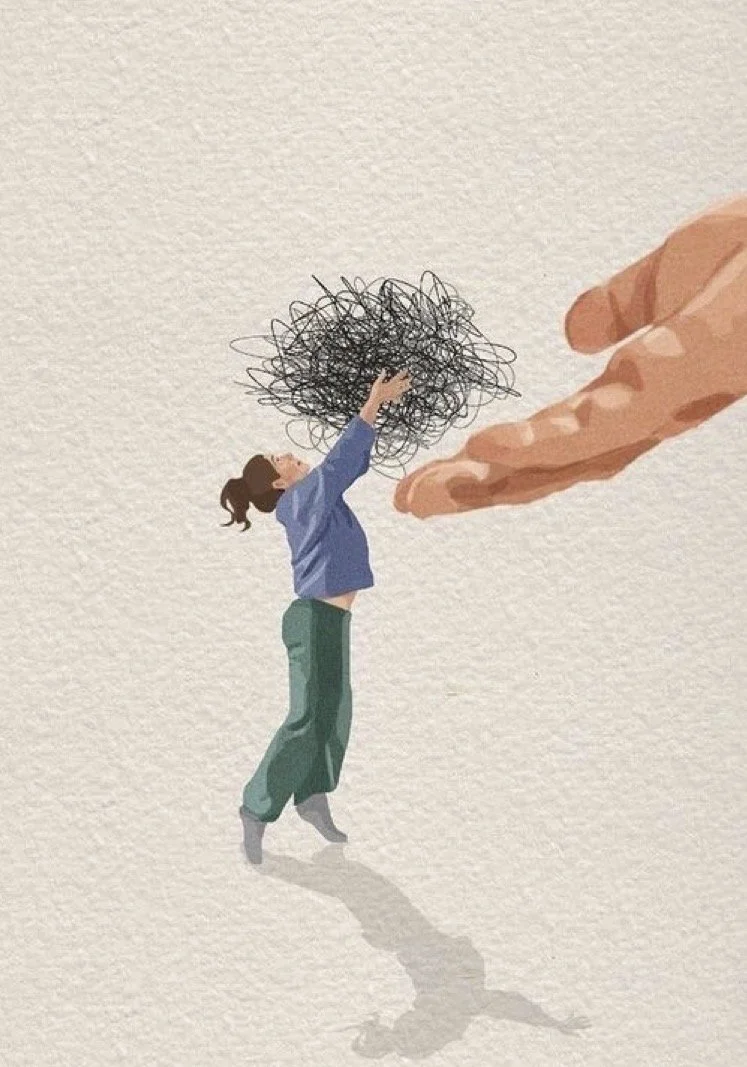
Beyond the Algorithm: Humanity, Dependency, and the Limits of AI in the Mental Health Field

Artificial Intelligence (AI) is now part of almost all of our everyday lives. AI is, for the most part, a very quick way for the people to obtain fast information on many quotidian aspects of life. It is able to create an immediate overview of a search or summarize an email (I am referring to Google Gemini). AI is a tool that can be very useful to many of us, but at the same time, it can impact our ability to think critically. There is much research available that shows the dependency AI has created in many of us (Tian & Zhang, 2025). This article refers specifically to college students and the level of dependency on AI, specifically ChatGPT, and its impact on brain development, especially as it pertains to critical thinking. This sample was taken from a university in China in which competence in digital literacy was deemed important; therefore, the use of ChatGPT may have also created an expectation of fluency in this emerging digital language. The findings showed overall that reliance on this new technology led to a decrease in activity in the area of the brain linked to critical thinking (Tian & Zhang, 2025).

It is almost obvious that AI has infiltrated  many parts of our lives and consequently, it has reached a more fragile audience that relies on AI, such as ChatGPT, for mental health support. Before engaging in a blame game to determine whether it is the population’s fault, AI’s fault, or even the mental health field’s fault, it is important to be aware of the data recorded on the use of AI in addressing mental health concerns. As someone speaking for a mental health platform I think it is important for the field to recognize that although mental health care should be accessible to everyone, it remains very much a privilege that many people, often the most vulnerable, do not have easy access to. Unsurprisingly, this has led people to turn to AI, to help them access a level of care that would otherwise be unavailable (Collins et al., 2025). There are mixed responses arising from this research paper. Some individuals reported satisfactory experiences, including that AI offers a strong therapeutic interaction, at times even suggesting that it almost perfectly emulates the empathic and attuned relationship between therapist and client. On the other hand, it has also been found to be extremely counterproductive, to the extent that it may even exacerbate certain mental health crises in which pathologies or mental health disorders are present (Collins et al., 2025).

In conclusion, forms of AI such as ChatGPT are able to serve as both a catalyst for filling gaps in care that are, too often, unfortunately inaccessible and as a potential detriment to critical thinking and developing brains. Additionally, it can function as a platform that provides unreliable and even harmful levels of care. A recent case involving a young adult who relied on ChatGPT during one of the most tumultuous phases of life, adolescence, while experiencing troubling suicidal thoughts led him to withdraw further and rely on the AI chatbot as a “suicidal coach” (as described in the family’s wrongful death lawsuit against the AI platform) (Yang, Jarrett, & Gallagher, 2025). This tragic case exemplifies how essential mental health care is for everyone, but especially for vulnerable communities. The level of care necessary for a human being to access health and safety must include crisis emergency protocols during periods of severe difficulty. Most of the time, the care offered within mental health services goes beyond the person's, or client’s interest, as human therapists believe in safety and protection above anything else - even if that is not the client’s first choice. That is what differentiates human therapists to chatbots. Ultimately, the therapist’s personal relationship to humanity is something that cannot be replicated by robots or artificial intelligence platforms. It is an aspect of therapy that our clients rely on, and an attribute of mental health care that needs to be protected.

References

Collins et al. (2025). ChatGPT as therapy: A qualitative and network based thematic profiling of shared experiences, attitudes and beliefs on Reddit. Journal of Psychiatric Research, 191, 277-284. DOI: https://doi.org/10.1016/j.jpsychires.2025.09.057

Tian, J., & Zhang, R. (2025). Learners’ AI dependence and critical thinking: The psychological mechanisms of fatigue and the social buffering role of AI literacy. Acta Psychologica, 260. DOI: https://doi.org/10.1016/j.actpsy.2025.105725

Yang, A., Jarrett, L., & Gallagher, F. (2025, August 26). The family of teenager who died by suicide alleges OpenAI’s ChatGPT is to blame. NBC News. URL https://www.nbcnews.com/tech/tech-news/family-teenager-died-suicide-alleges-openais-chatgpt-blame-rcna226147
February Is Teen Dating Violence Awareness Month

At first glance, February does not seem like a month filled with celebrations or festivities. In reality, one widely recognized holiday—Valentine’s Day—tends to overshadow all the other important observances the month holds. Walking down the streets or riding trains, subways, and buses, or even stepping into schools and restaurants, you are likely to see people carrying flowers for their loved ones. This red-rose-and-Cupid-coded celebration often dominates the entire month, causing many of us to overlook other significant observances, such as Black History Month or the fact that February is also Self-Esteem Awareness Month. Alongside Valentine’s Day, however, February also marks another crucial observance: Teen Dating Violence Awareness Month (TDVAM).

Teen dating violence is a widespread form of intimate partner violence (IPV) that occurs within the teenage dating population. Dating itself is a common developmental milestone that often begins during adolescence. At its best, dating can be a meaningful way to experience love, affection, respect, and healthy relationships. Unfortunately, for some teens, dating can become a source of harm, leading to physical, emotional, and psychological pain, as well as manipulation. Like other forms of IPV, teen dating violence can include stalking, control, physical, verbal, and psychological aggression, as well as bullying or cyberbullying. It affects individuals aged 12 to 18 who are involved in past or present romantic or consensual relationships (National Institute of Justice). Research also shows that dating is beginning at increasingly younger ages—sometimes as early as 12 or 13 years old (March 4, 2017). As a result, cases of IPV are emerging within even younger populations.

While it would be possible to write at length about the reasons intimate partner violence is affecting younger age groups, the purpose of this article is different. This piece is meant to reach parents, teachers, teenagers, and the friends and family members of teens, with the goal of starting conversations—not passing judgment. Open and honest communication is widely recognized as one of the most effective ways to prevent harmful or even tragic situations.

These conversations begin by meeting young people where they are and understanding their language. For instance, using terms like “red flags” and “green flags”, that might seem a little silly and immature for older generations,  can help create a sense of familiarity and safety in our youth. When people feel heard and understood, they are more likely to open up. Adolescence is often a time when individuals feel unseen or dismissed. By showing genuine interest in young people’s lives, language, and perspectives, we can take an important first step toward awareness, prevention, and meaningful change.

For more information on Teen Dating Violence and it’s Awareness Month visit:

https://nij.ojp.gov/topics/crimes/teen-dating-violence and https://www.teendvmonth.org/ 

References 

What is Teen Dating Violence? (2017, March 4). Teen Dating Violence. https://www.teendvmonth.org/what-is-teen-dating-violence/

National Institute of Justice. (n.d). Teen Dating Violence. https://nij.ojp.gov/topics/crimes/teen-dating-violence

The Body as a Map: An Art Therapy Reflection

We’ve explored the connection between the mind and the body, and how the body stores perceived and experienced threats in its physicality—through posture, muscle tension, protective movements, or restlessness. These responses are protective by nature, yet over time they can create cycles that become detrimental to our overall well-being.

We often hear about the importance of releasing tension, exercising, and listening to our bodies—but how do we actually learn to listen? One common challenge is not knowing where stress or trauma lives in our bodies, or where we may need a little more care. Have you ever ended a long, even fulfilling, day feeling sore, unsettled, or simply “off”? I often experience this as a signal to check in with myself and notice where stress has quietly accumulated.

Much of our understanding of the mind–body connection was shaped by Dr. Bessel van der Kolk, particularly through his book The Body Keeps the Score. One of his key insights is that healing the mind requires tending to the body—and vice versa (van der Kolk, 2014). This idea has influenced art therapy practices that view the body as a kind of map: holding pathways of safety, tension, and avoidance. One way to access these maps is through a practice known as a body scan or body mapping. This practice allows us to visually explore where tension lives within our bodies. 

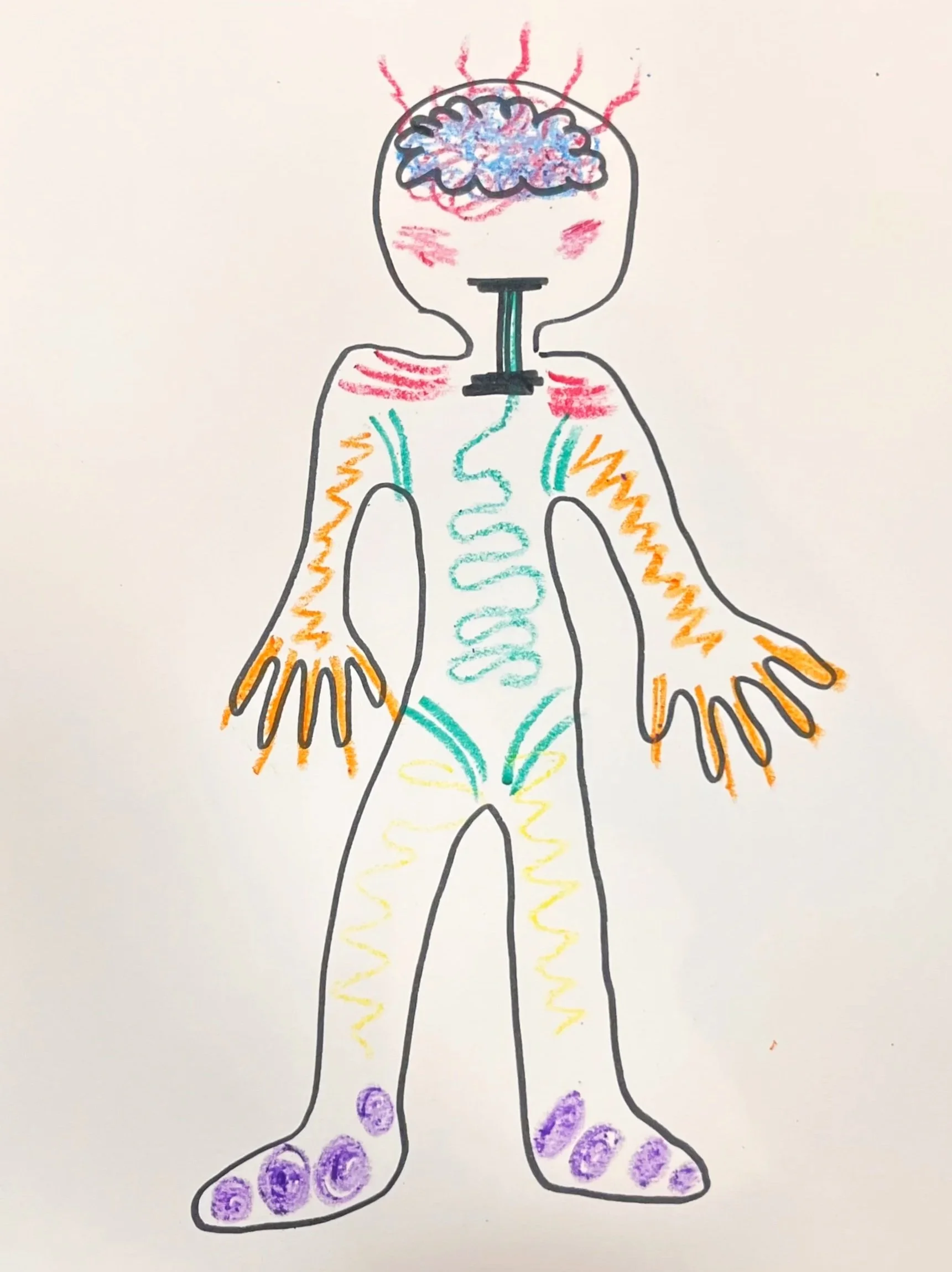
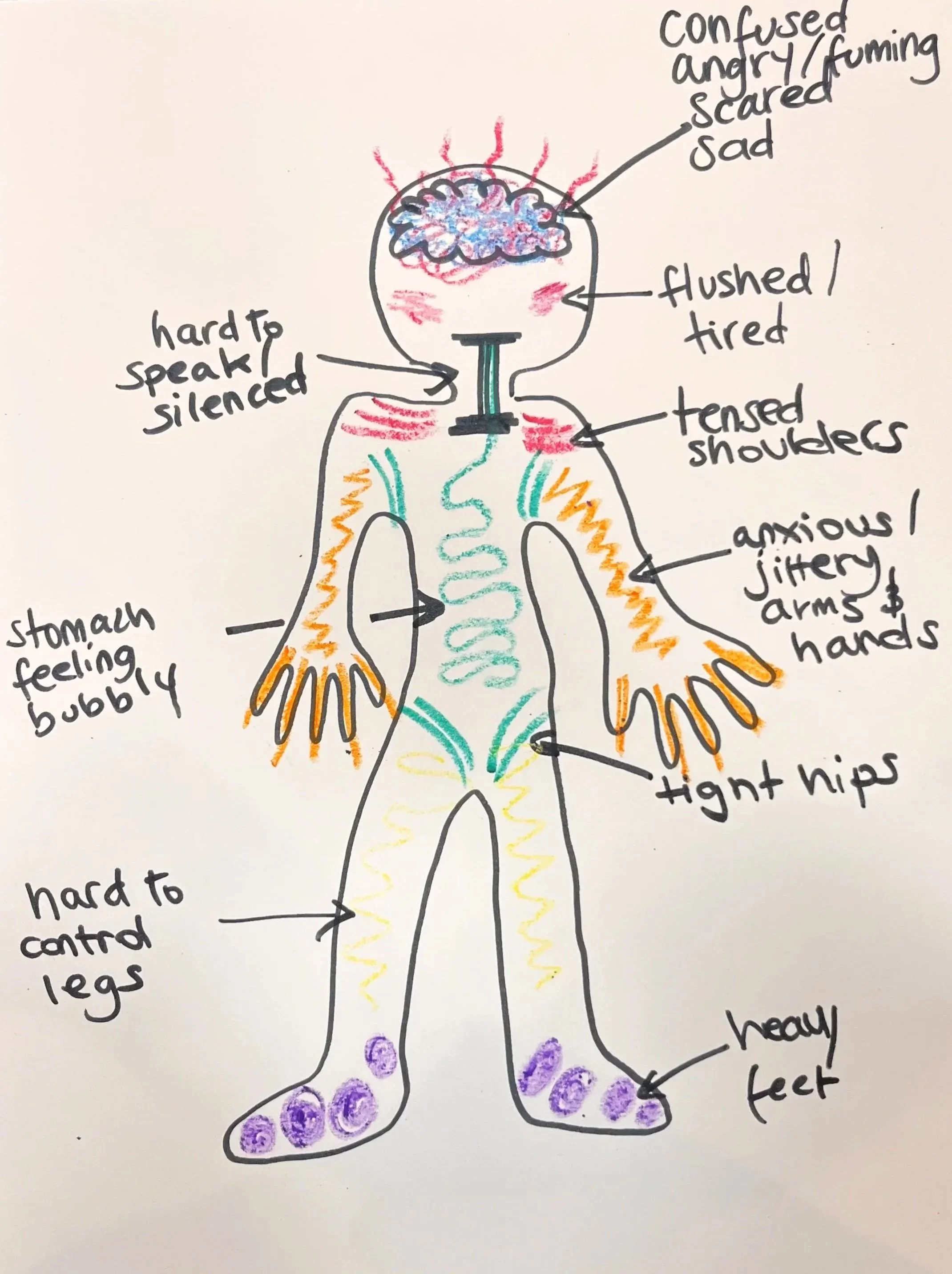
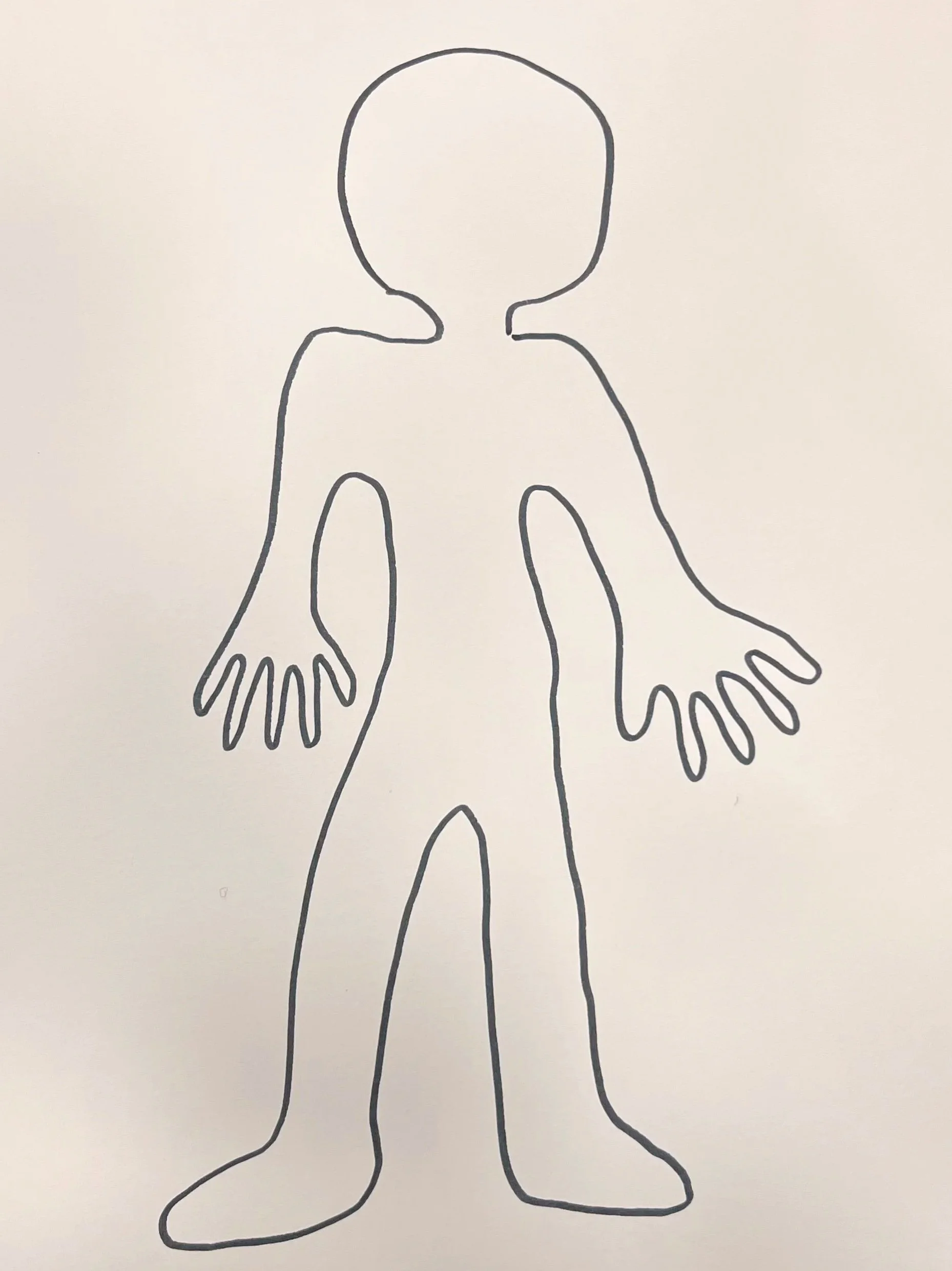
To begin, find a quiet space and set aside about 30 minutes. You might light a candle, make yourself your favorite tea, or simply pause and breathe. With paper and drawing materials, sketch a simple outline of your body—accuracy isn’t important. Slowly check in with each area, asking questions like: How does my head feel? My chest? My stomach? Use color or marks to represent what you notice.

Once you are finished:

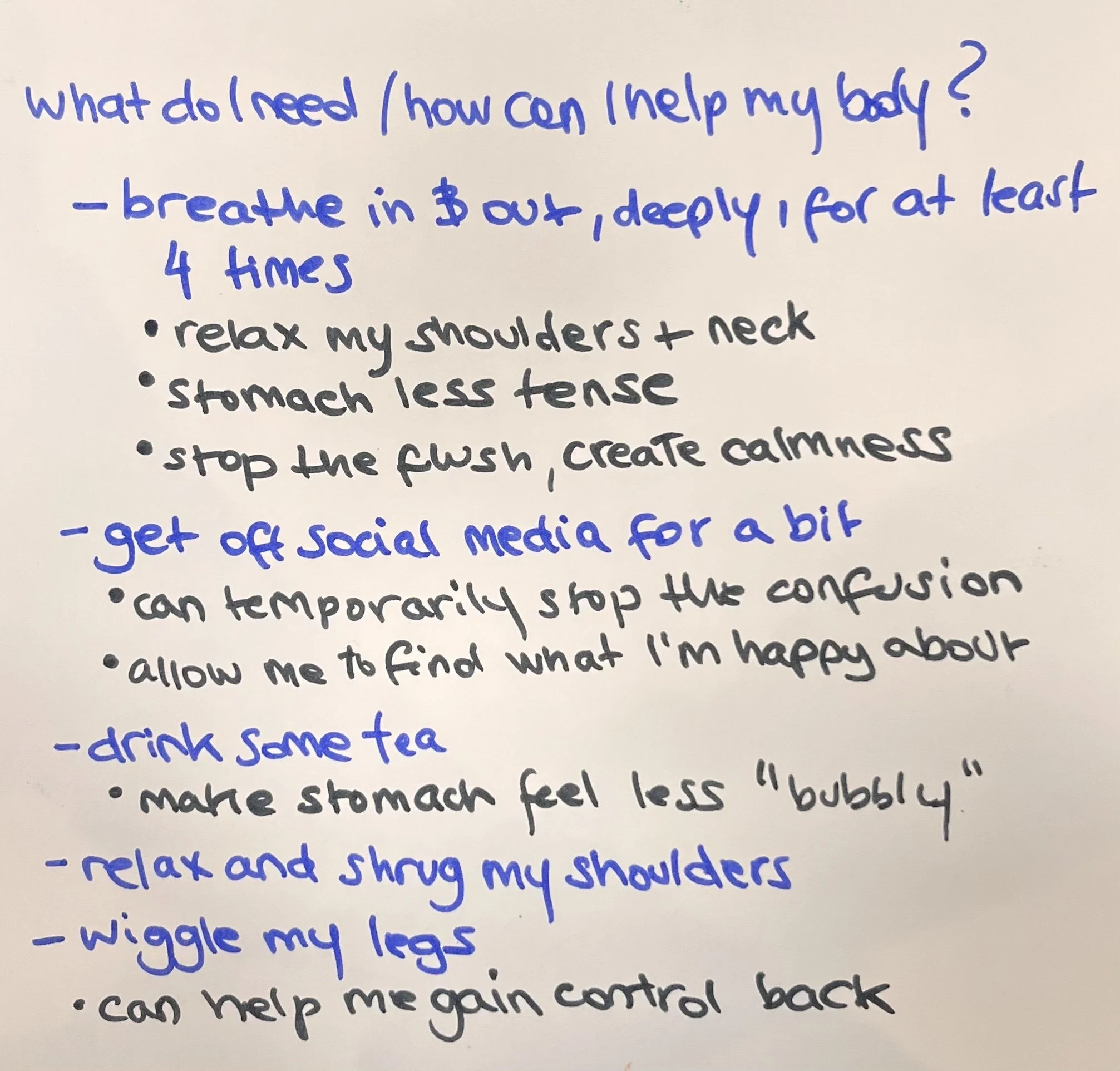
Take a moment to name what you expressed. Naming sensations or emotions can lessen their intensity and help restore a sense of agency. Finally, turn the page and reflect on what might help counterbalance any discomfort you discovered. You are the expert of your own body. Trust its signals. Protect your peace. Caring for yourself is often the first step toward caring for others.

Not All Care is Visible

Our population is struggling to find reliable information about events and news happening both in our country and around the world. Social media platforms have become a primary source of information for many of us. But are social media platforms reliable sources? And, more importantly, is it enough to consume information solely through social media?

At present, many of us feel deeply divided. We notice people not sharing posts about injustices happening worldwide or choosing not to engage with the more serious side of social media—such as news coverage and circulating videos. This can make some of us feel upset, or even furious. Thoughts like “Do they not care about what’s happening?” or “Why aren’t they using their platforms to inform others or protest these injustices?” may come to mind. However, the answers to these questions are rarely as simple as “yes” or “no.”

As much as we want to stay connected, informed, and supportive—sharing love, knowledge, and solidarity—we must also be mindful of how our social media consumption affects our well-being. For some people, self-care may look like choosing not to post, like, share, or repost traumatizing content. This can create tension, confusion, and sometimes anger, leading us to wonder, “Do people not care?” . However, protecting one’s peace may sometimes appear as disengagement to others. Taking care of ourselves is often what allows us to care for others more sustainably. Choosing to engage selectively with social media does not mean someone is indifferent to what is happening; it may simply mean they are obtaining their news from other sources and processing global events in more private ways.

Social media can certainly be a place of connection—where we feel empathy, find shared understanding, and take comfort in knowing others think and feel similarly. At the same time, it can also be a space where we learn how to protect ourselves and our peace. One way to do this is by limiting screen time. For example, smart phone settings allow users to set daily screen time limits; once reached, the device notifies you and can restrict access to certain apps. Another option is to take a temporary break from social media altogether. Allowing yourself a one-day—or longer—detox can help reset your nervous system. Social media apps can be deleted temporarily without losing any account information. Turning off notifications from social media apps can be another, less drastic way, to limit intake.

No matter how you choose to step back from social media, it is important to remember that the core of this decision is not a desire to disengage from the world, nor does it necessarily reflect a lack of care. Instead, it can be a way of processing the overwhelming and often traumatizing information that continually reminds us of how heavy the world can feel. When we allow ourselves to be protected—and when we extend that same understanding to others—we create more space to care for one another with intention and compassion.

Care as Resistance: Taking Care of the Body in Times of Fear

There is a tremendous amount of suffering, fear, anger, and confusion taking over nearly every part of the world right now. This reality is undeniable and a shared experience. It can be difficult to put our feelings into words or remain functional when anxiety and loss permeate so many of our lives. During moments of hardship and loss, however, it becomes especially important to rely on what we do have by focusing and directing our energy toward things that are within our control. One example of this is the value of nurturing, sharing, building, and respecting community. In times when we are forced to feel helpless and fearful, it is imperative that we counteract these emotions with acts of love and connection. The connection I am referring to can be as simple as reconnecting with our own bodies. 

There is substantial research on how the body stores information that the brain processes—or, conversely, information that is too traumatic to process cognitively. For instance, the renowned psychiatrist Bessel van der Kolk explores this concept extensively in his bestselling book The Body Keeps the Score (2014), in which he examines the profound connection between the mind and the body. Dr. van der Kolk explains how both systems store and process traumatic experiences. Prior to the publication of this work, the mind–body connection was largely unexplored in mainstream trauma research. One of the central takeaways of this concept is that healing from trauma requires addressing both the mind and the body (van der Kolk, 2014). Because of this connection, when the mind suffers, the body does as well; in turn, the body’s response to suffering can deepen the disconnection between the two. When this disconnection occurs, the mind can enter a state of “override”—a term used by neuroscientists and psychologists to describe the brain’s heightened perception of danger—which then triggers the body’s stress responses: fight, flight, freeze, or fawn (November 7, 2016). 

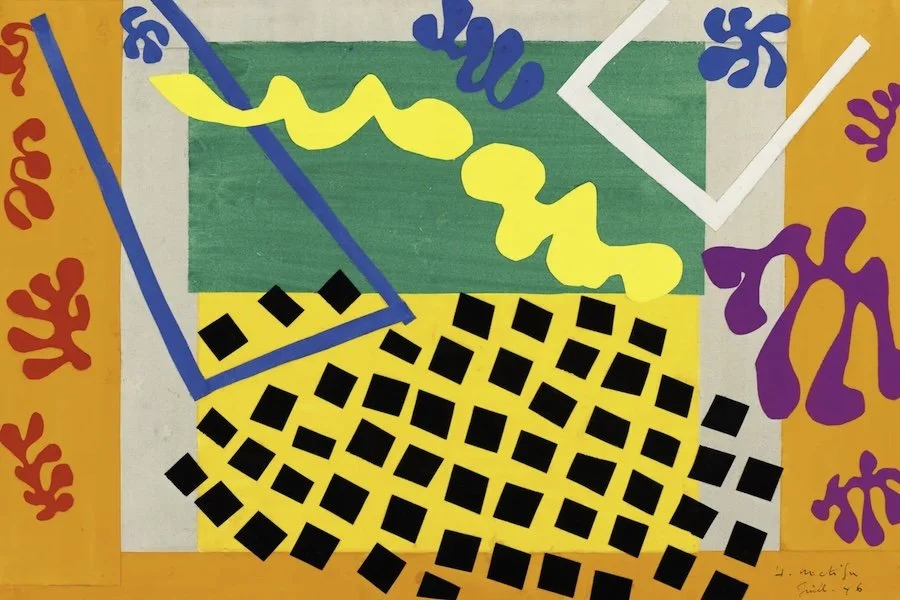
Henri Matisse - Cutout (henrimatisse.org/cutouts.jsp)

The body’s response to oppression offers a clear example of this phenomenon. Oppression demands, among other things, submission and conformity, while suppressing authenticity and self-expression. When the mind perceives these threats—such as the pressure to conform in order to survive—the body responds in various ways. These responses may include chronic tension in muscles, fascia, and tissues as protective mechanisms; postural changes toward defensiveness, such as hunching or rigidity; the development of psychosomatic illnesses, including stress-related conditions resulting from a weakened immune system; or emotional shutdown as a way to cope with overwhelming threats (Eloff, 2024). On a more hopeful note, there are ways to counteract these bodily rigidities that are often simpler than we might expect.

One such method is laughter, which may seem strange or cliché. In moments when there is very little to laugh about, finding small opportunities to experience joy—perhaps with people we trust—and allowing ourselves a genuine belly laugh can be an effective way to release built-up tension in the body (Stiwi & Rosendahl, 2022). These researchers analyzed more than 2,000 studies examining the effects of laughter on somatic and psychological conditions and found surprisingly positive outcomes. Laughter was shown to improve mental, physiological, and psychological health, making it a powerful and accessible tool for well-being. Another low-cost and accessible practice is setting aside personal time to play music—whether through headphones or out loud—and allowing oneself to dance. Dance, when practiced with the intention of releasing bodily tension through movement and shaking of the limbs, can help alleviate physical stress in a relatively short amount of time (January 17, 2023).

Small acts of care for ourselves and others can help us find moments of light during periods of darkness. Laughing with loved ones, nurturing and respecting our communities, and dancing intentionally to release tension are all acts of resistance that can help counterbalance the oppression, conformity, fear, and anger we are currently experiencing. Cultivating awareness of our own needs and caring for both our minds and bodies is a crucial first step toward extending that care to others.

References

Eloff, A. (2024). Enacting the Anti-fascist Body: Somaterapia as Collective Liberatory Becoming. Somatechnics, 14(1).

Golden, Bernard. November 7, 2016. The Power of Emotions to Override Rational Thought. URL: https://www.psychologytoday.com/us/blog/overcoming-destructive-anger/201611/the-power-emotions-override-rational-thought.

Hornthal, Erica. January 17, 2023. Every Body Dance Now: The Power of Dance/Movement Therapy for Healing Trauma. URL: https://traumaresearchfoundation.org/every-body-dance-now-the-power-of-dance-movement-therapy-for-healing-trauma/.

Stiwi, K., & Rosendahl, J. (2022). Efficacy of laughter-inducing interventions in patients with somatic or mental health problems: A systematic review and meta-analysis of randomized-controlled trials. Science Direct, 47.

van der Kolk, B.A. (2014). The body keeps the score: Brain, mind, and body in the healing of trauma. Viking.

Rethinking the New Year

As we approach the end of the year, many of us begin to feel a sense of jitters. This can come from making New Year’s Eve plans, setting resolutions, cleansing our spaces, or simply trying to recover from the holidays before stepping into what feels like a major shift. Scientifically and astronomically, the arrival of a new year marks the moment when Earth completes a full orbit around the Sun (Time and Date, n.d.). However, January 1st as the first day of the New Year—and December 31st as New Year’s Eve—is a social and civil construct established by Western society. In fact, other cultures recognize the New Year on different dates. For example, in Chinese culture, the New Year is celebrated between February 17th and March 3rd during the Spring Festival, which follows the lunisolar Chinese calendar.

I share this to offer perspective on how much pressure we place on New Year’s Eve and New Year’s Day. This pressure often shows up through the expectation of creating New Year’s resolution lists. These lists can help the human brain feel prepared, organized, and ready for the “big change” that society tells us is coming. Neuroscientists have found that the brain uses a process known as chunking to remember information and complete tasks effectively (Li et al., 2016). Chunking allows us to mentally group tasks into manageable pieces—essentially creating internal lists—so we don’t become overwhelmed. This process happens constantly, often without us realizing it, and it helps us stay focused and structured.

That said, our brains can also become overloaded when lists are too long, too broad, or unrealistic. When this happens, lists can create the opposite effect—leading to stress, overwhelm, and discouragement rather than clarity and motivation.

This article isn’t meant to argue whether making lists are good or bad, or whether they are effective or ineffective. Instead, its purpose is to offer a bit of comfort and a gentle reminder that we don’t need to place so much pressure on ourselves as the year comes to a close. Beyond understanding what lists are and how they can be helpful when used intentionally, it is also worth remembering the importance of rest. Moments of stillness, hibernation, and a quiet check-in with our energy and overall “battery charge” can help us reconnect with why we make lists in the first place—not as demands, but as tools meant to support us.

We wish you all a restful, peaceful and safe Happy New Year!

References

Time and Date. (n.d.). What is a tropical year? TimeandDate.com. https://www.timeanddate.com/astronomy/tropical-year.html

Li, G., Deng, L., Wang, D., Wang, W., Zeng, F., Zhang, Z., Li, H., Song, S., Pei, J., & Shi, L. (2016). Hierarchical chunking of sequential memory on neuromorphic architecture with reduced synaptic plasticity. Frontiers in Computational Neuroscience, 10, 136. https://doi.org/10.3389/fncom.2016.00136

Inner Landscape: An Art Therapy Exercise To Promote Well-Being and Self-Exploration

Humans have benefited from artistic self-expression since prehistoric times. In fact, people who lived in caves started documenting their everyday lives, routines, struggles and their victories through drawings and paintings. These artifacts serve as proof of the benefits of artistic expression as a way to understand and explain the world through non-verbal ways. 

If you’ve ever doodled while listening to a lecture in school or while having a long conversation on the phone, you’ve engaged in artistic expression. Sometimes, words just aren’t enough; they can feel like a barrier or may simply be inappropriate for expressing the emotions we are experiencing. Art, then, holds the power to express what words can’t. 

Creative Arts Therapies have long been studied by researchers, clinicians, and artists for their positive impact on mental health. The term “art therapy” emerged in the 1940s, when British artist Adrian Hill experienced the healing effects of artistic self-expression during his recovery from tuberculosis, and the American Art Therapy Association was later founded in 1969. Art Therapy is a form of psychotherapy facilitated by a licensed or supervised professional and has been shown to help reduce stress and anxiety, increase self-esteem, and promote self-exploration (Shoukla et al., 2022). It is accessible to anyone—no artistic skill is required, only an open mind and willingness to engage in the creative process—though therapeutic guidance is recommended, especially when using art for mental health purposes.

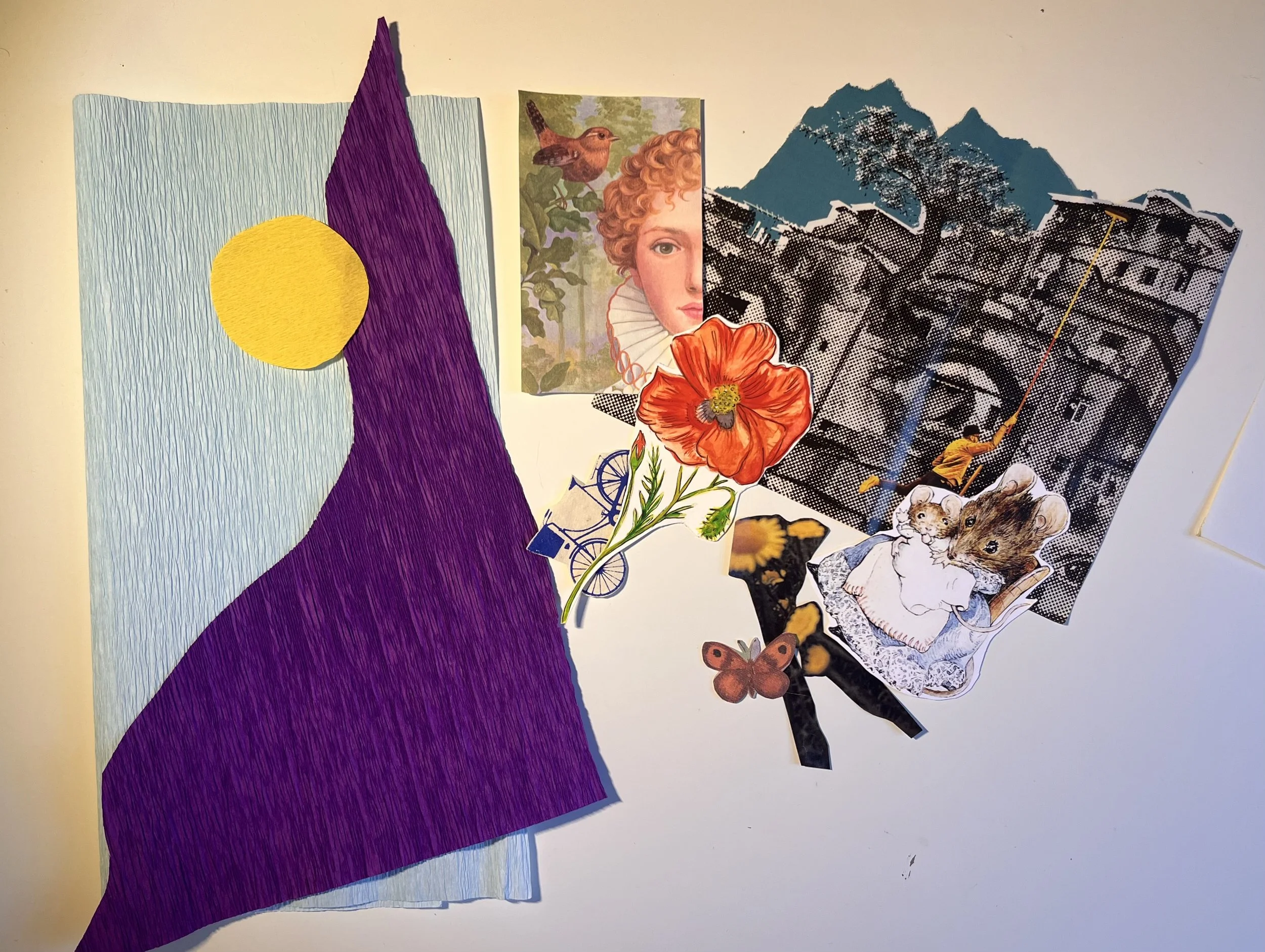
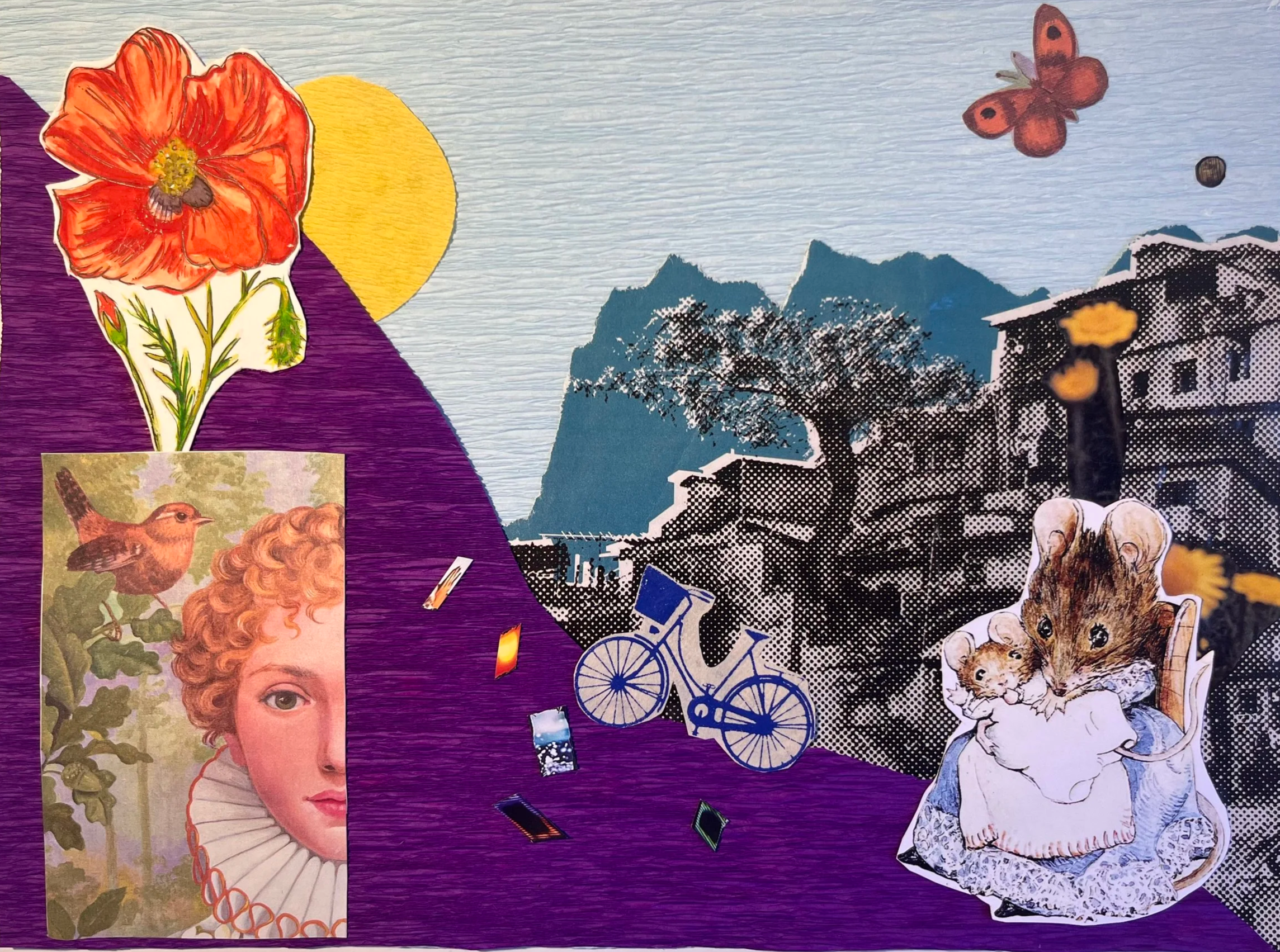
An art therapy activity that can allow for that self-exploration and self-expression that we are much talking about is the Inner Landscape. This activity can tap into our feelings, personalities, and can give us a better understanding of ourselves, our support system, what we like and don’t like. Like many art therapy directives, this experiential does not require a specific set of materials. In fact, you can express your inner landscape through drawing, painting, photography, collage, sculpture or any form of fiber arts materials (like crocheting). As an example, I will collage my inner landscape attaching shapes, colors, textures and images to best create what represents my inner landscape. I am providing this just as a sample, if you would like to engage in this exercise, do not feel the pressure to make it look like mine.

In order to not over analyze and possibly slip-into our inner critic, think of your inner landscape as a safe and calm place, favorite color, a shape that reminds you of your soft edges, or textures that bring you a comfortable feeling. As it is personal and varies between everyone, here are some questions to pose yourself before you start. 

  • What natural settings form my inner landscape? A desert? A forest? A sea or ocean? Is it a wetland? Hills? 

  • At what time of the day does my landscape exist – day or night? Is there light or darkness?

  • What are the meteorological conditions in my landscape? Is it raining, snowing, sunny, cloudy, or a combination? 

If you’re choosing to collage your inner landscape, choose a couple of images that catch your attention and interest. Please remember this represents you, this is a moment that you’re dedicating to yourself. If you wish, you can share this with whomever you respect and want to share it with.

Collage images I have chosen

Your image is now taking shape. These are some introspective questions you can ask yourself: 

  • If you were to give it a title, what would it be?

  • How do you feel after taking some time reflecting on who you are and what makes you, you

  • What surprised you, and what, if any, were elements of your product that you were expecting to see? 

  • Do you feel satisfied with your image, or is there something missing in describing you? 

My final Inner Lanscape

As you complete your piece, congratulate yourself for taking the time to pause what you were doing and dedicate it to the love and care of your Inner Landscape. Art therapy is not about the final product, as much as it is valuable to complete our pieces; instead what is more valuable for art therapists is the process of your creation. Like for a lot of artistic pieces, they might never end, we could always find something to add. However, taking the moment to be proud of ourselves for pausing, creating and reflecting is more important than the final pieces we are left with.

References

Shoukla, A., Choudhari, S.G., Gaidhane, A.B., & Syed, S..Q. (2022). Role of Art Therapy In The Promotion of Mental Health: A Critical Review. Cureus, 14(8). DOI: 10.7759/cureus.28026.

Mindful Hands, Calmer Mind: Why Crochet Supports Mental Health

The common struggle that I seem to identify with a lot of friends, acquaintances, and within myself, especially at this time of year, is memory loss or challenges with attention. 

Surely, this could be linked to the fact that there are so many things that we end up doing and having to think of during this time of the year – holiday gifts for family members, friends and/or loved ones, the deadlines at work and so on. However, there is an activity that has been recommended by Art Therapists, Psychotherapists, and even doctors that could have beneficial effects on our memory and attentional capacities. That is crochet

Crocheting is a fiber arts activity that involves the use of a crochet hook, yarn, and our hands (fingers and wrists). Crochet’s history is quite murky, as historians are still not able to credit it to a specific country or age in time as there are little to no relics. However, first signs of crochet, used for utilitarian purposes, date back to Egypt with relics of two-toed socks. The first use of crochet, as an embellishment, dates back to 550 BC Iran with Rushti style crochet tapestries. Fast forwarding to our modern times, the style of crochet has evolved quite a bit, and is now used for the same utilitarian purposes, like for creating hats, scarves, or sweaters, for embellishments and accessories like purses or even earrings, but it has also developed in a practice that can promote mindfulness, concentration, attention, relieve anxiety, and also help with memory connections and promote the wellbeing of our neural pathways! 

In fact, a group of researchers (Rossi et al., 2025) have tested how our body activates while crocheting and what are, if any, the neural pathways that are activated whilst creating something as simple as a “Granny Square”. These researchers, with the help of expert crocheters, as well as non-experts, were able to find that there is in fact a link between the bodily movements involved in crocheting and areas of our brain. For those of us who are “non-crochet-experts” (spoiler alert: you don’t have to be an expert to benefit from crochet), crochet involves loops and stitches all throughout, and these are highly repetitive. Repetitiveness, in this case, of the crochet stitches, creates a sense of consistency and well-known expectation that both have the power to soothe us and relieve us from anxiety and/or stress. That is the power of the pattern. For example, the pattern for a Granny Square involves knowing three basic stitches of crocheting: chains, loops, and double crochets. These stitches are then repeated throughout the pattern to form the famous granny square.

But I digress … These researchers (Rossi et al., 2025), have gone the extra step to say that crocheting does aid with our focus, attention, as well as memory as it requires a kind of motor control that involves a) focusing on what we are doing (crocheting), b) remembering the pattern and the stitches, and c) counting the stitches to complete the pattern. Therefore: engaging in a pattern that is highly repetitive can make us feel calm and soothe our anxiety; anxiety could potentially lead to inattention and forgetfulness, but crocheting and the effectiveness of the pattern required can bring us back to the consciousness of our body which can make us more aware, attentive, focused and potentially even better our memory retention. 

In conclusion, as a new Art Therapist who is really devoted to fiber arts and for whom crocheting has an added emotional value as it connects me back to my roots (to my nonna), I can definitely see the benefit of crocheting as a way to ground myself, keep my hands occupied, connect with others, and even better my memory. I have linked the photo of a granny square that I have created, how I make use of it, and also an easy granny square pattern if you feel like trying this at home!

References

Rossi Sebastiano, D., et al. (2025). Crochet increases attention through a requiring motor skill learning. Scientific reports, 15(1), 4141. https://doi.org/10.1038/s41598-025-88777-9

Suicide Rates are Highest in 30 Years - Here's Some Warning Signs to Know When Someone Needs Help

An article released recently just revealed that rates of suicide are the highest in 30 years. In an effort to break down the stigma and encourage you to find help or encourage your friends and family to seek the help they need, let's go over some common warning signs so we can prevent these tragedies from happening.

Read more